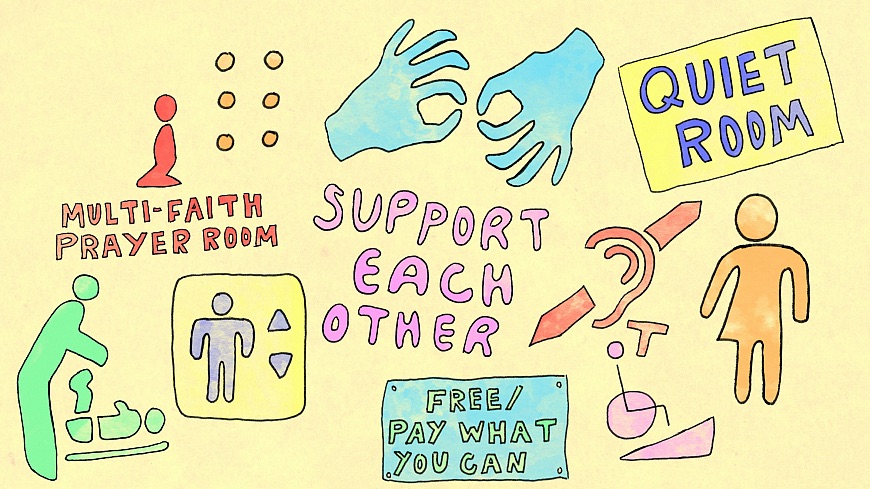
Illustration by Mireille van Bremen

in this issue

Back Enter! – in and out

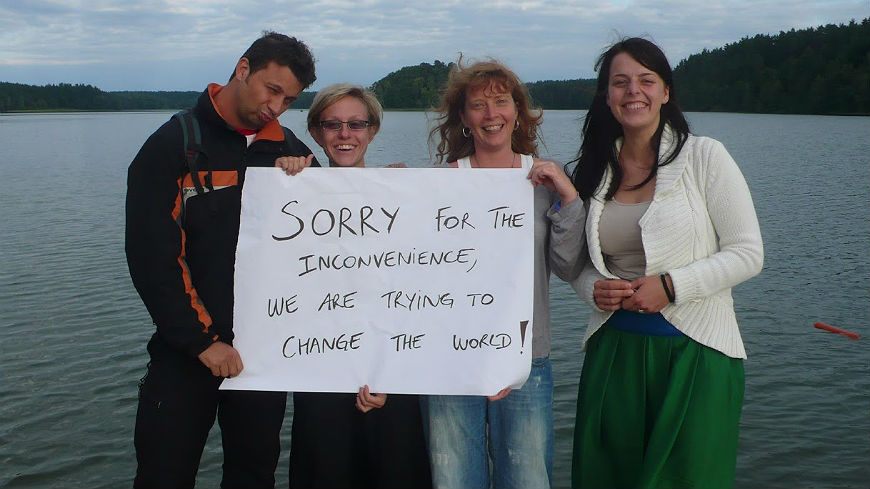
Photos: copyright Council of Europe

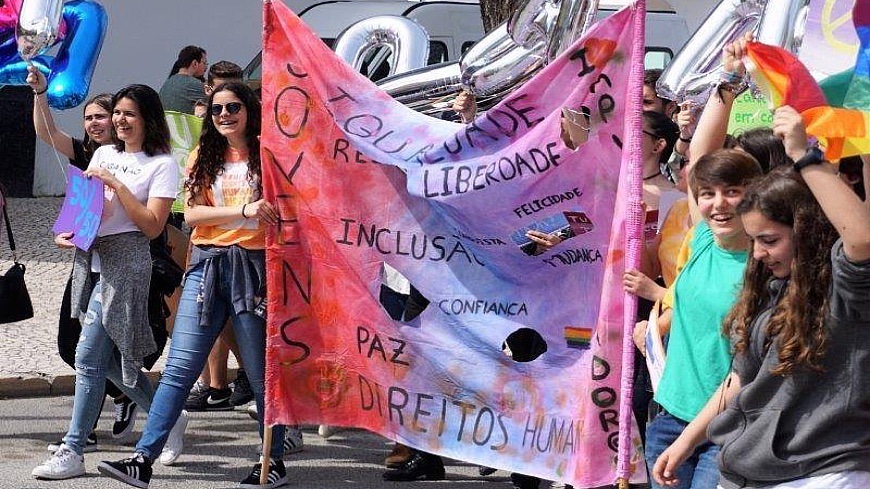
Photos: copyright Council of Europe

Enter! – in and out

On roots, sources, origins and impact of Enter!


 by Nadine Lyamouri-Bajja 

08/04/2020


When I was asked to write this article about the origins and impact of Enter!, I heard myself saying yes before I could even think about it. How could that happen? First of all, I do not believe I’m particularly gifted in writing, secondly, I don’t have the time… But this yes came from deep inside, because it was about Enter! 

So here I am.

The Enter! project remains one of the most powerful and meaningful youth work and training projects I was lucky enough to be involved in. 

I started to work as an educational advisor in the European Youth Centre of the Council of Europe in Strasbourg in early 2006. Just before that, in October 2005,

In the French media you could read headlines such as “Is the Republic burning?”, or “When the neighbourhoods are burning”. 

Some weeks after the violent confrontations between the police and young people in so-called “disadvantaged neighbourhoods” or “popular neighbourhoods”, the political debate starts shifting towards the “identity crisis” of multicultural young people raised in these neighbourhoods, about their confusion between their countries of origin and their French identity or citizenship, about integration policies and equal opportunities, about discrimination and communitarianism (a word used in a sociopolitical context to explain that more importance is given to the community than to the individual). 

I remember sitting in my office one night with Peter Lauritzen1 discussing youth participation, violence, exclusion and discrimination in relation to young people in the suburbs and areas with fewer opportunities. I remember us talking about how youth work could possibly reach out to those young people and areas. And I remember us wondering about how an organisation such as the Council of Europe could possibly contribute to this work, as the situation was far from concerning only France. 


 Enter! begins

I was therefore particularly enthusiastic and motivated when the Enter! project on the access to social rights of young people from disadvantaged neighbourhoods was set up as a response to the growing concern of the European Steering Committee on Youth (CDEJ) and the Advisory Council on Youth (AC) about the inequalities and challenges related to social cohesion and inclusion of all young people, and especially those situated in “disadvantaged” neighbourhoods across the 47 member states of the Council of Europe. 

The project aimed at “developing youth policy responses to exclusion, discrimination and violence affecting young people in multicultural disadvantaged neighbourhoods”. 

I was directly involved in the preparation and implementation of various activities and steps of Enter!, but the most impacting for me, is the Long Term Training Course (LTTC)2.

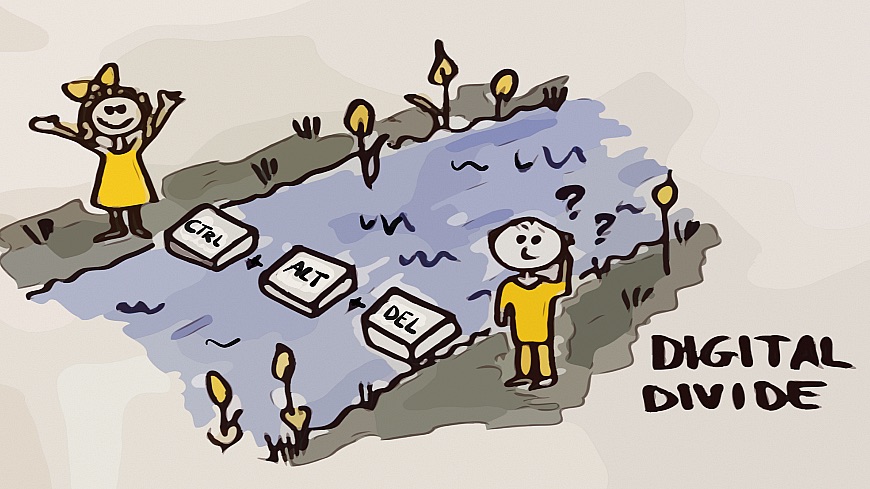
The name of the project, “Enter!”, was given by the preparatory team of the first LTTC as a reference to inclusion, to being welcome to come in, as an invitation, and last but not least, as a reference to the button on the keyboard in line with the e-learning dimension of the course.


 Central questions for us

Among the many questions that came up during this training course, here are the ones that both the preparatory team, the participants and the young people involved mentioned:

The use of the concept “disadvantaged”: in the first LTTC, as well as the Enter! youth meetings and in the local projects, various youth workers and young people questioned the use of the word “disadvantaged”, as they could not identify with it as regards to their neighbourhoods. They described it as patronising and minimising potentials, the richness in community work and collective organisation. Although the word disadvantaged was chosen to describe the neighbourhoods as such, and not the people living in the neighbourhoods, this remained a debatable issue throughout the project.

This issue was partly taken up in the Enter! Recommendation CM/Rec(2015)3 on access of young people from disadvantaged neighbourhoods to social rights which was adopted by the Committee of Ministers in 2015, by “recognising that many young people from disadvantaged neighbourhoods are motivated to contribute to the improvement of their own situations and those of their communities; and recognising the positive role they and their organisations can play for social cohesion”.

  • The strong diversity of challenges and situations in those neighbourhoods from one member state to another, and sometimes from one region to another: although all participants could agree on the key issues of discrimination, exclusion and violence, the state responses and the access to basic needs varied greatly.
  • Social conditions and culture: in most cases, a direct link was drawn between the poor conditions in disadvantaged neighbourhoods and the population living there. Disadvantaged neighbourhoods are often inhabited by people with a migration background (even if sometimes third generation), refugees, asylum seekers or Roma people3). This often led to clear discrimination based on the locality and related to the type of population. 
  • Co-operation between Enter! participants, their sending organisations and local authorities: in the case of the LTTCs, participants were asked to develop local projects contributing to enhancing access to social rights for young people. The success of the projects did not only depend on the high investment and commitment of participants, but also on the actual involvement of their sending organisations, and furthermore on the opportunity to co-operate closely with local authorities. Although various seminars and meetings, as well as the co-operation with the Congress of Local and Regional authorities, who supported with close collaboration, co-operation remained one of the main challenges throughout Enter!
  • Reaching out to actual community leaders: as in some other specific projects, one could wonder about the capacity of an organisation such as the Council of Europe to reach out to local communities in disadvantaged neighbourhoods. In other words, did Enter! manage to work with the concerned target group? Access to information about such a project, the capacity to work and communicate in English or French, the capacity to fill in a complex application form, the time and capacities to develop local projects, all these criteria could contribute to favouring an exclusive group of participants.


 What made this project so special? 

Through the range of activities and formats in Enter!, the project aimed both at reaching out to communities through competence development and empowerment of youth workers, and at making a change at policy level through the recommendation and co-operation with local authorities. Finally, the beneficiaries – the young people in the neighbourhoods – were directly involved as well both through the local projects developed in the LTTC and through the youth meetings and the youth week. This cross-cutting approach, combining a bottom-up and a top-down approach, was both innovative and inclusive by itself. 


I remember when the participants of the first LTTC described their project ideas, with a high level of emotion, pride and commitment. Their engagement was not necessarily new. But formulating their project ideas through the lenses of social rights and human rights, on the basis of existing instruments, and with the support of the Council of Europe, made a difference. 

I remember hot discussions around a session on “human rights”, and how some participants mentioned that Roma young people in some settlements did not even have access to drinkable water, so that access to education, employment or leisure was not even to be mentioned. 

I also remember the permanent challenge of talking “about” certain groups of young people, rather than “with” them. The Enter! youth meeting and youth weeks, as well as the local projects developed within the LTTC, partly contributed to changing this paradigm, but the general challenge of fully including the concerned communities remained throughout the project.

Enter! surely did impact at various levels. Among the various impacts at youth work and youth policy level mentioned in the study on the Enter! project, here are some of the impacts that could be seen:

Enter! managed to raise awareness at European, national and local level about the situation in disadvantaged neighbourhoods on the one hand, and about social rights and instruments to protect social rights, on the other. 

As a result of the first Long Term Training Course, participants created the YSRN (Youth Social Rights Network), which continues to function as an international youth NGO, runs study sessions and international youth projects, and is strongly involved in networking and advocacy on social rights.


The Enter! youth meetings brought together young people, policy makers and field workers to discuss access to social rights through various perspectives, with various languages and with a highly solution-focused approach. Hundreds of young people contributed directly or indirectly to the development of the Enter! Recommendation CM/Rec (2015)3 on access of young people from disadvantaged neighbourhoods to social rights, which was adopted by the Committee of Ministers in 2015.


 Direct impact?

One could wonder if Enter! did directly improve access to health, education, employment, leisure, decent housing or non-discrimination for young people across Europe… there surely remains a long way to go, but both at youth work level and at policy level, milestones have been laid, and people’s competences are still being developed to contribute to social change. 


The youth sector of the Council of Europe is currently proceeding to review the implementation of the recommendation, which most probably will not show the direct impact of the Enter! project and recommendation. But it could surely focus on the fact that working on access to social rights needs time and commitment, as well as constant reminders to take access to social rights seriously. The topic is far from being over just because Enter! is. Many local organisations that got involved at all stages of Enter! are taking the recommendations, the lobbying work and the educational and youth policy work on board to continue advocating for access to social rights of all young people. Véronique Bertolle’s article “Entering the Enter! Youth week”, published in this issue of Coyote, gives a beautiful overview of the diversity of organisations, challenges and young people concerned. It also gives hope about the fact that the work is being pursued.

As for myself, I keep as a conclusion that context is everything. That it is rarely about people and capacities, but often about the resources and support they are given. And that the more challenges, the more resilience. 


 References

Lauritzen P. (2008), Eggs in a pan: speeches, writings and reflections, Council of Europe Publishing, Strasbourg.


1 Peter Lauritzen (1942-2007) was the former Head of the Youth Department. More can be read about Peter here or here.

2 I am referring to the first LTTC (2009-11). Since then, two further series of the LTTC have taken place.

3 The term “Roma and Travellers” is used at the Council of Europe to encompass the wide diversity of the groups covered by the work of the Council of Europe in this field: on the one hand a) Roma, Sinti/Manush, Calé, Kaale, Romanichals, Boyash/Rudari; b) Balkan Egyptians (Egyptians and Ashkali); c) Eastern groups (Dom, Lom and Abdal); and, on the other hand, groups such as Travellers, Yenish, and the populations designated under the administrative term “Gens du voyage”, as well as persons who identify themselves as Gypsies.

  • Diminuer la taille du texte
  • Augmenter la taille du texte
  • Imprimer la page


Issue 29

All Rights Included. 
  Enter! Youth week   
  and beyond


Back Thinking seriously about social inclusion

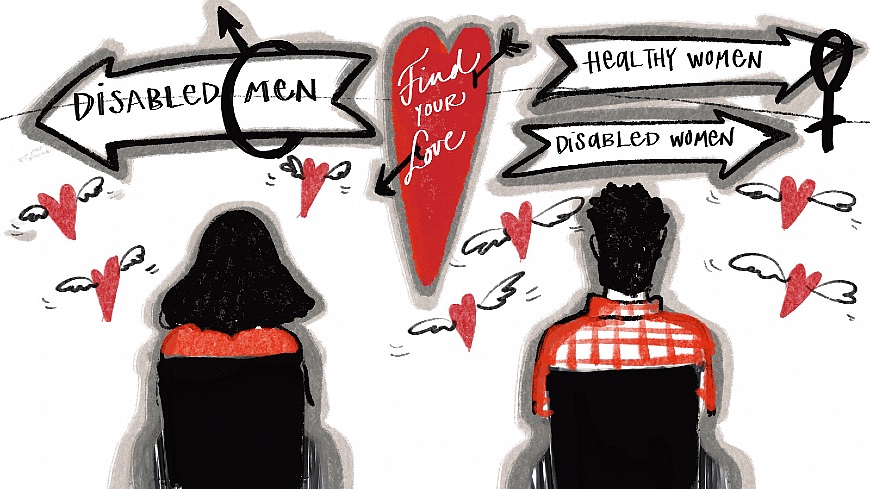
Illustrations: Vicky Stephenson*

Illustrations: Vicky Stephenson*

Thinking seriously about social inclusion


 by Dan Moxon 

15/04/2020


I trained as a youth worker in the early 2000s at Manchester Metropolitan University, UK. Here my fantastic youth work lecturers drilled into me that youth work is about social justice as well as promoting the equality and rights of those young people who were most excluded. This is a value I hold with me today. 

With my classmates we would talk about how youth workers should avoid becoming “agents of social control” and ensure we subverted the state and smash systems of oppression. I struggled with this, as it was hard to believe I was some sort of radical revolutionary while the government was paying for my training. And while campaigning and advocacy is a vital part of the youth sector, the radical youth work revolution I was promised never quite seemed to happen.

Today, I still strongly believe that all youth work should think about the impact it has on inequality. It can either contribute to the existing patterns of exclusion and inequality, or challenge them.I think all youth work needs to think seriously and systematically about how it challenges inequality and promotes social inclusion. Not just through political advocacy, but also through every youth club, every youth project and every youth programme’s potential contribution to social inclusion. 

I’m not alone; Europe is making big progress on inclusion. Enter! Youth Week recently marked a review of the implementation of the Committee of Ministers of the Council of Europe Recommendation CMRec(2015)3 (the Enter! Recommendation) on access of young people from disadvantaged neighbourhoods to social rights. The review showed a very significant growth of all kinds of activities promoted by social rights and young people. 

But for me, it’s also important to make a distinction between social inclusion and the general inclusion of young people. These two terms are sometimes mixed up in our multilingual community. For me, social inclusion is about the patterns of exclusion, inequality and denial of rights, among different social groups of young people. Social inclusion asks us to consider why young people with disabilities have fewer employment and education opportunities than  young people who are not disabled. Or why young people who grow up in social care are more likely to end up in the criminal justice system. Or why trans young people are more likely to commit suicide than non-trans young people.

Talking about the general inclusion of young people asks questions about the differences between generations. It asks why young people today have more precarious employment than older generations did. It asks why the cost of living has risen significantly faster than wages, or why previous generations’ overuse of environmental resources has stored up a climate disaster for today’s youth to suffer consequences from.

Both of these conversations are important, and both of them are conversations about young people’s access to rights. But this article is written as a guide for anyone who wants to think seriously about the social inclusion of marginalised and excluded groups of young people and what youth work can do to contribute to this.


 10 steps to thinking seriously about social inclusion


1. Identify what your target community is

For me, any serious conversation about social inclusion and social exclusion starts with thinking about exactly who is in the community of young people your youth project organisation or programme1 is aiming to work with. We might call this your “target community”. 

For some youth projects, this community might be based on geography. A youth club, for example, might aim to work with any young people in the neighbourhood in which it is based. For some youth projects, it might be a mixture of geography and other factors. Unlike a youth club, a specialist LGBTQ+ youth centre would aim to work mainly with LGBTQ+ young people in that neighbourhood.

2. Work out which groups of young people are in your community

Once you know what your target community is, the next step is to work out which groups of young people are in it. By groups I’m referring to what sociologists like to call “social categories”. Some of the main categories that are relevant to young people include gender, ethnic background, religious background, disability/ability, sexuality, and education level or education status2.

Thankfully, you don’t have to work this out yourself. National statistics offices3 (or their equivalent in non-EU countries) already produce this information, and many municipalities will produce profiles on their local population. It can be very easy to find what is known as demographic statistics at either local or national level.

Once you have them, you can often use the same statistics for five years or more – they do change, but not very quickly. They also don’t have to be perfectly accurate. The statistics offices themselves struggle to estimate some things, and for the youth sector’s purposes, we can work with the rough estimates. 

When I was working in youth clubs in the North West of England, a typical profile of our communities looked a bit like this:

  • 10% of young people are from ethnic or religious minority backgrounds; 
  • at least 5% of young people identify as disabled; 
  • 4% of young people are “not in education, employment or training” (NEET);
  • 10% identify as LGBTQ+;
  • just under 50% of young people identify as female, just under 50% identify as male; 
  • a small but unknown number identify as transgender, non-binary or other genders.

3. Work out which groups of young people attend your youth project

Next, you need to work out who is actually attending your youth project. The aim of this is to build a profile of the young people who attend. This will be similar to the one you have for your target community, but based on the young people who take part in your project. 

This means asking participants for information about their background. Good practice is to make sure this information is collected anonymously, and is optional for a young person to give. This means the information they give can never be linked to them, or be used as a source of discrimination.

One way of doing this is to ask participants to complete an “equal opportunities monitoring form” whenever they join your project. This is a simple form where people tick boxes to give information about their background based on things like gender and ethnicity. Importantly, it does not contain the name of the person completing the form, so stays anonymous. 

Over time you can add these data up to build a profile of who is attending your youth project. You probably need information on at least 50-100 young people to get reliable figures.

4. Work out which groups of young people are excluded from your youth project

Once you have both the profile of young people who attend your project and the profile of people in your target community you can compare the two. This will tell you which groups of young people are excluded from your work and which are included.

Roughly speaking, if there are no barriers to the inclusion of marginalised young people in your work, the profile of your project participants should match the profile of your target community. But if there is a big difference between the two, this means something is contributing to the exclusion of a particular group or groups of young people from your work. 

For example, if you are working in a community where you know 10% of young people are from Roma4 communities, but only 2% of the people in your youth project are Roma. This tells you that young Roma are being excluded from your work. Small differences can be due to random chance. If 9% percent of your participants were young Roma, it is less likely this 1% difference is down to exclusion. 

There are statistical tests that can be done to identify what is due to chance, and what is not. This might be useful for large national programmes, but for most actors in the youth sector it is enough just to use a common-sense approach. 

5. Identify what the barriers are for those groups who are excluded

Knowing that some groups are excluded from your youth project is different to knowing that some groups are excluded by your youth project. Exclusion is related to structural inequality and discrimination in our society. It doesn’t start and end with what your youth project does. Instead, there are large-scale factors that contribute to the marginalisation of young people and your project can either reinforce or challenge them. For example, public transport systems that are not wheelchair friendly, or affordable make it harder for someone who is disabled or on a low income to travel to your project. Experiencing hate speech in school makes it harder for a young person from a black or ethnic minority background to be confident they would be safe attending a nearby youth project for the first time. 

The best way to identify the barriers that are excluding groups of young people is through participation. In other words, listening and starting conversations with young people from marginalised backgrounds about what makes them feel excluded, and what creates barriers, then taking their views seriously. This means creating a safe space for the young people from marginalised backgrounds who already access your project to have these conversations. It also means using outreach and detached work to have the same conversations with those who don’t access your project. 

6. Put in place things (and resources) to reduce those barriers

Once you have identified these barriers, a serious commitment to social inclusion means putting in place something to overcome or counteract them. 

This means working to counteract barriers that occur outside of the youth project and removing the barriers that occur inside the youth project. In the examples above, this might mean paying for taxi services for young wheelchair users, or doing one-to-one work with young people from ethnic minority backgrounds in the school to help them feel comfortable attending the project for the first time. Inside the youth project it may mean ensuring hate speech is not tolerated, and the building is physically accessible (as well as many other things).

There is no one-size-fits-all solution to removing barriers; different barriers require different solutions. However, nearly all require resources – whether that is extra staff or volunteer time, or financial investment. Thinking seriously about social inclusion means committing a proportion of your resources to removing barriers.

It is also important to think about intersectionality and the way different barriers might be interlinked. For example, the barriers faced by women from ethnic minority backgrounds may be a combination of both racial and gender discrimination and inequality. 

7. Remember that access is only one part of social inclusion

Being able to come through the door of a youth project – to access it – is only one part of being included. Being included is also about feeling welcomed, valued, respected, recognised and safe. In the context of a youth project, this means young people from marginalised backgrounds need to feel as much ownership of the space as any other young person.

For several years I worked on a project in the UK dedicated to involving young Muslims of Pakistani and Bangladeshi heritage in local youth councils. Over the years we had worked hard to ensure that any food offered at events contained Halal meat (Halal is a dietary practice observed by some Muslims). I was talking to one of our young Muslim participants about this and his response was:

Yeah, but you are still serving the halal meat in sandwiches though. I never eat this. Sandwiches are what white people eat, we eat dhal and aloo ghosti.”

This is an example of the difference between feeling included and access. The food was accessible to him, he could eat it and still observe his faith, but the style of the food made him feel like he was an add-on to an environment that was designed by and for white British people like myself. Serving food from one culture rather than another is rarely enough to drive anyone away from a youth project, but it does send out messages about which culture is dominant, and how well the minority culture is understood and accepted. 

8. Develop “socially inclusive projects” as well as “social inclusion projects”

In the youth sector we sometimes talk a lot about “social inclusion projects”. I’ve visited many youth centres that have dedicated one night or afternoon per week to an “inclusion night”. On these nights they might, for example, run a programme for young people from social care who struggle at school, or host a session where carers can attend with young people with disabilities.

There is nothing wrong with this approach. Bringing people together who have common experiences can be a powerful way to create a dedicated safe space, provide specialist support and enable marginalised young people to recognise they are not alone in their experiences. 

However, what about the other nights of the week? A serious commitment to including people from marginalised backgrounds doesn’t just end with providing dedicated social inclusion projects. If we are talking seriously about social inclusion, every project and every aspect of an organisation or programme’s work should consider how inclusive it is. Dedicated social inclusion projects are a vital part of this, but running them doesn’t give permission for our other work and projects to become exclusive. Social inclusion cannot be something that only happens in the youth centre on Wednesday nights from 7:00-9:00 p.m.

9. Deliver better social inclusion outcomes for young people

Being able to fully participate in a youth project does not mean a young person from a marginalised background is now “included” in society. It means they are included in youth work and the youth project. This is a great thing, and worth aiming for, but the youth sector can also do a lot more for young people than just this.

Youth work is a tool that can transform lives. If we are thinking seriously about social inclusion we need to think about what differences youth work makes to the young people from marginalised backgrounds who take part. Being socially excluded means being less able to access things like education, health care, housing and employment. A good youth project can enable young people from marginalised backgrounds to have better access to these things, and can contribute directly to their social inclusion. 

Thankfully we know that youth projects can be very good at doing this5. But we shouldn’t assume this happens automatically. A well-designed youth project will recognise each way that the young people it is working with are excluded in society, and try to put in place activities that aim to resolve each one. 

10. Recognise that youth voice is not homogenous

One of the ways marginalised groups are excluded is lack of political voice. Even a quick look at the low numbers of women, people with disabilities and ethnic minority groups included in our governments and parliaments shows this. 

In the youth sector we have a tendency to talk about young people as if there is a single common “youth voice” – a view or a position that all young people have. This is not completely untrue; there are many things that young people experience as a result of being young or part of a particular generation (unaffordable housing and precarious employment, anyone?!). However, there are also many issues of concern that relate primarily to specific marginalised groups of young people. These can sometimes get lost if we treat young people’s voices as if there is one common youth view. The concerns of a young immigrant with no employment might be very different to the concerns of a recent university graduate. They also might be very similar (unaffordable housing and precarious employment, anyone?!). The only way to find out is to listen.

The only way to do this is to ensure that our participation projects promote the voices of young people from all backgrounds, as well as recognise the differences between voices. Many already do this well, and participation projects of all types, be they youth councils and youth organisations, or alternative forms of participation, can be effective in this regard6. But they will need to take social inclusion as seriously as any other youth project, and apply many of the same steps outlined in this article. 


1 The ideas in this article can be applied to youth projects, youth programmes and youth organisations. However, to avoid having to say all three terms, I will just use the phrase youth project in the rest of the article to refer to them all.

2 Income level is also very relevant, but much more challenging to measure as it links closely to young people’s dependency on parents or carers.

3 Eurostat (n.d.), Links to national statistics offices: https://ec.europa.eu/eurostat/web/links.

4 The term “Roma and Travellers” is used at the Council of Europe to encompass the wide diversity of the groups covered by the work of the Council of Europe in this field: on the one hand a) Roma, Sinti/Manush, Calé, Kaale, Romanichals, Boyash/Rudari; b) Balkan Egyptians (Egyptians and Ashkali); c) Eastern groups (Dom, Lom and Abdal); and, on the other hand, groups such as Travellers, Yenish, and the populations designated under the administrative term “Gens du voyage”, as well as persons who identify themselves as Gypsies.


5 Geudens, T, Hagleitner, W., Labadie, Fand Stevens, F. (2014) International youth projects benefit most those with fewer opportunities. Salto Inclusion Resource Centre. Available at https://www.salto-youth.net/downloads/4-17-3230/ImpactOfMobilityOnYPFO.pdf accessed Jan 2020.

6 Pivrulescu, C, Moxon, D, Banari, R, Kost, R, Capecchi, D, (2019) A seat at the table for everyone. Salto Participation and Information Resource Centre. Available at https://www.salto-youth.net/downloads/4-17-3921/A_seat_at_the_table_for_everyone_a4_bleed3mm_SALTO_PI.pdf accessed Jan 2020

  • Diminuer la taille du texte
  • Augmenter la taille du texte
  • Imprimer la page