


Illustration by Coline Robin
How do the conclusions from the 4th EYWC land in practice?
When more than five hundred youth work professionals, policy makers and researchers gathered in Valletta, Malta last May for the 4th European Youth Work Convention, the energy at the Mediterranean Conference Centre was unmistakable.
At the heart of the closing session, Alice Bergholtz, one of the two general rapporteurs, presented the Convention’s conclusions. Jim O’Donovan, the other rapporteur, later summarised these conclusions at the Steering Group meeting in September 2025, grouping them into three connected strands: Actions, Processes and Concepts. These weren’t abstract headings, but an invitation to reflect on how the collective voice gathered in Malta might echo back into youth centres, organisations and local realities across Europe.
As Alice noted: “The youth sector is positively fluff and fluid, because it is highly adaptable to any circumstances young people live in.”
As a follow-up to the Convention, this article looks at how those promises might take root in practice.
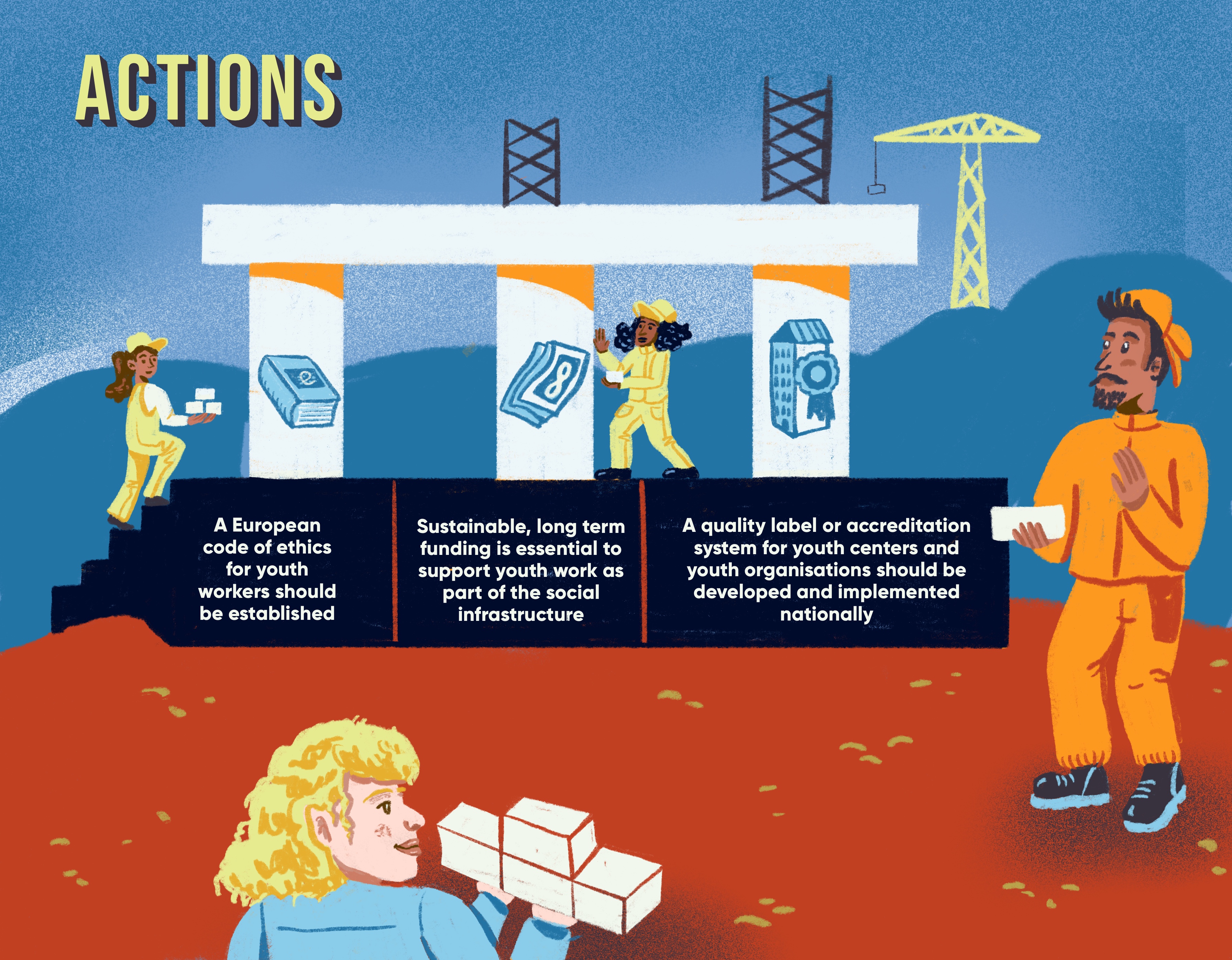
 Actions
The conclusions made in Malta are deeply practical. They call for a European Code of Ethics for Youth Workers, sustainable and long-term funding, and a quality label or accreditation system for youth centres and organisations (modelled on the Council of Europe’s own framework but implemented locally).
Behind these proposals is a simple question: how can youth work become a stable part of Europe’s social infrastructure rather than a project-by-project experiment?
Embedding youth work into national budgets isn’t easy, but it signals that youth work belongs alongside education, culture and social policy as a recognised contributor to democracy and well-being. Yet for many, the distance between policy ambition and daily practice still feels wide.
For youth workers, ethics and quality aren’t just policy ideals. They’re lived in everyday work through trust, time and engagement with young people’s realities. The challenge now is to make sure tools developed at the European level support, rather than constrain, that reality.
Processes
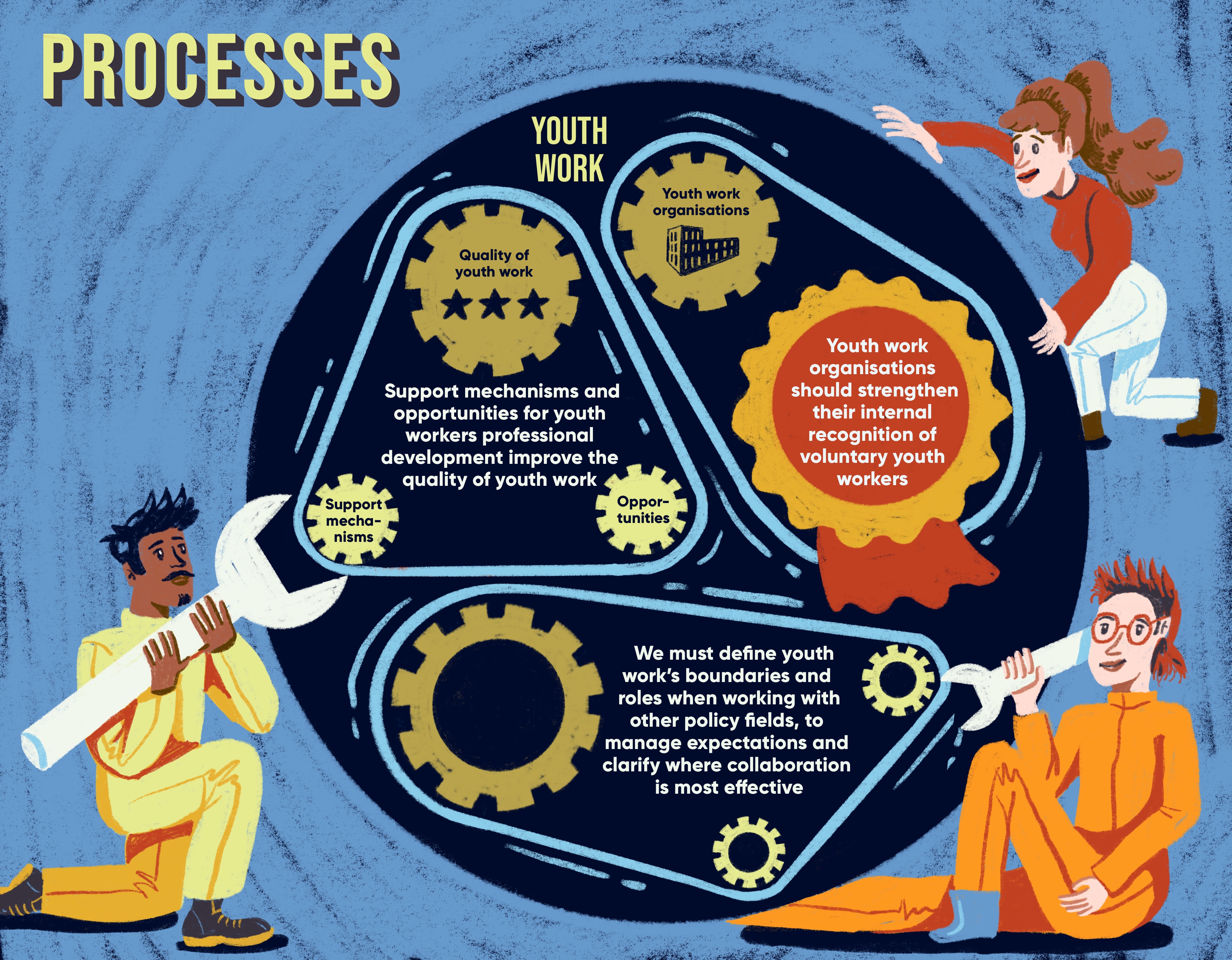
The second strand, Processes, focuses on how we support the people and systems that keep youth work running. The conclusions highlight competence development, recognition of volunteer youth workers, and clear cooperation between youth work and other policy fields.
Strategic investment in competence development both at national and European levels is framed not as a luxury but as a necessity. Professional learning, whether through Erasmus+ exchanges, mentoring schemes or national training programmes, is what keeps youth work responsive and alive.
Recognition of voluntary youth workers also emerged as a key issue. Their contribution, often unseen, sustains countless initiatives across Europe. The Convention called for both intrinsic and extrinsic recognition - from mentoring and access to learning opportunities to symbolic awards and public acknowledgement.
 Like the flowers that compete for light, water and sustenance, so political advocacy and professional practice compete
for visibility, recognition and resources.
(Miriam Teuma, Chairperson of the European Steering Committee for Youth in the Final report of the 4th European Youth Work convention)
Clarifying boundaries between youth work and related fields such as social work, education or mental health support is equally essential. This isn’t about separation but about clarity: knowing where collaboration works best helps manage expectations and strengthens partnerships.
Clear processes, in turn, build trust between youth workers and institutions, between paid staff and volunteers, between local realities and European frameworks.
Concepts
The final strand, Concepts, turns to identity. What exactly is youth work and what is it not?
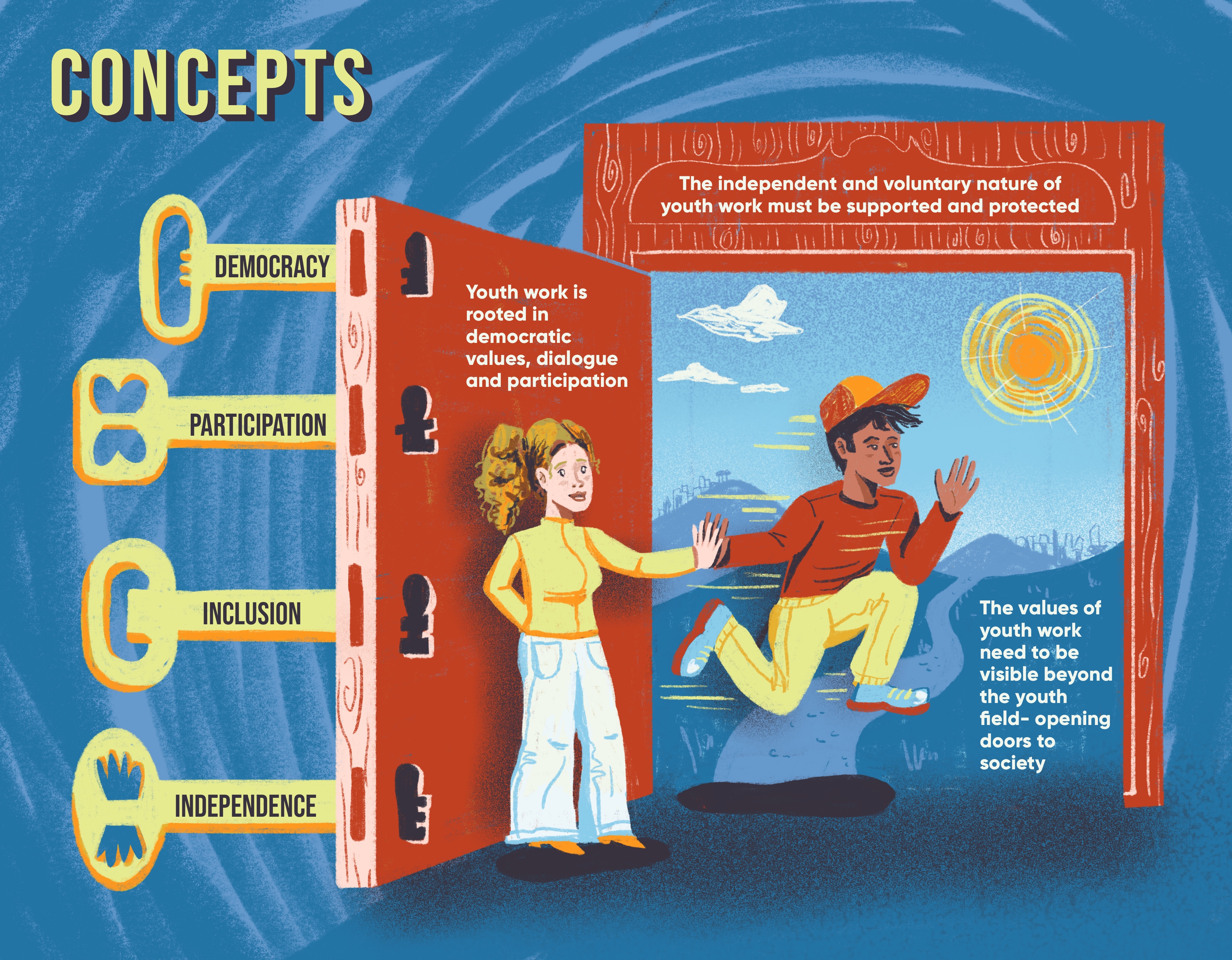
Descriptions from the Convention tie youth work closely to both its professional and voluntary character. It can be empowering or preventive, but it must be clearly defined and distinct from similar professions.
At the same time, the conclusions warn against creating a “youth work bubble”. The values that underpin the field such as freedom, empathy, participation, equality need to be visible beyond the sector. They must speak to the wider public: policy makers, educators and communities who might not yet fully grasp what youth work offers.
Political tensions across Europe serve as a reminder that independence is fragile. When youth work becomes too entangled with political agendas, its role as a safe, open and critical space for young people can be threatened. Protecting that independence, then, is a democratic act in itself.
Between the noise and the silence
The Maltese convention carried the theme of Noise versus Silence. The “noise” of policy debates and institutional frameworks is necessary, but so is the “silence” of practice, i.e. the moments when youth workers listen, reflect and act alongside young people.
Moving from Malta to the field means finding balance between the two: turning European energy into the steady pace of everyday practice. The conclusions are not an end point but a compass for what comes next. They point towards an integrated European youth work strategy, one that values ethics, supports professional and voluntary growth, and holds on to the heart of youth work as a space of freedom and growth.
And for those who prefer to listen, the accompanying podcast episode, After the 4th European Youth Work Convention, captures voices from across Europe reflecting on what Actions, Processes and Concepts mean in their own daily work.
Thank you for reading and supporting the youth work journey.




Issue 38
4th European Youth Work Convention
