Back Young voices reveal the unequal impact of environmental challenges

Belgrade 5 January 2026
  • Diminuer la taille du texte
  • Augmenter la taille du texte
  • Imprimer la page
  • Imprimer en PDF
Young voices reveal the unequal impact of environmental challenges

“For me, the most important insight was realising that environmental problems are not ‘neutral’, but that they affect certain groups of people much more strongly.”

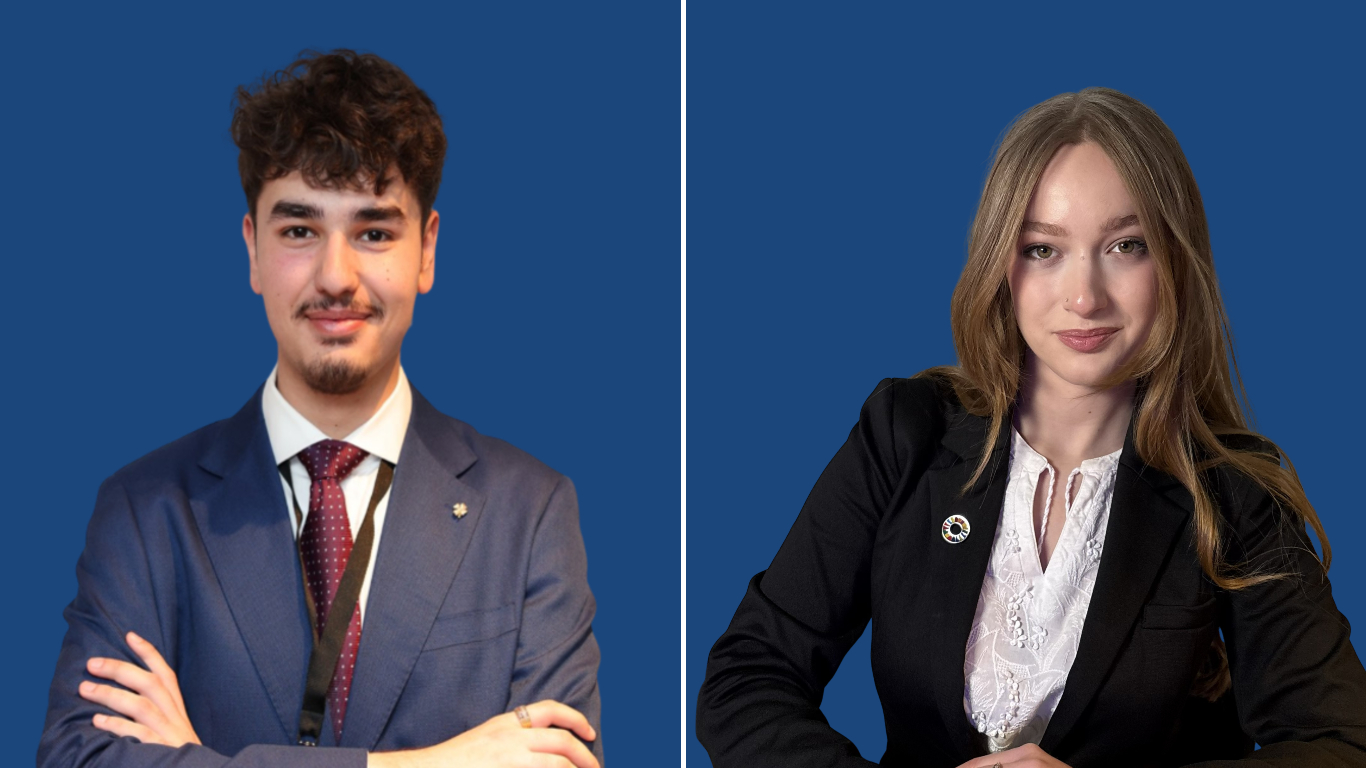
This reflection, shared by Vasilije Keranović from the Panel of Young Advisors to the Protector of Citizens, after working with students on a Council of Europe survey, captures one of the key messages emerging from the new Special Report on Youth and Environmental Rights. Presented in Belgrade, the report sheds light on how young people in Serbia increasingly understand environmental degradation as an issue closely linked to inequality, discrimination and access to rights.

“I understood that pollution, poor living conditions and climate change are most strongly felt by those who already have fewer opportunities to protect themselves or to influence decisions,” Vasilije adds. He also highlights another important takeaway from the process. “Another important fact is that many adults, especially educated people, are willing to take action on these issues.”

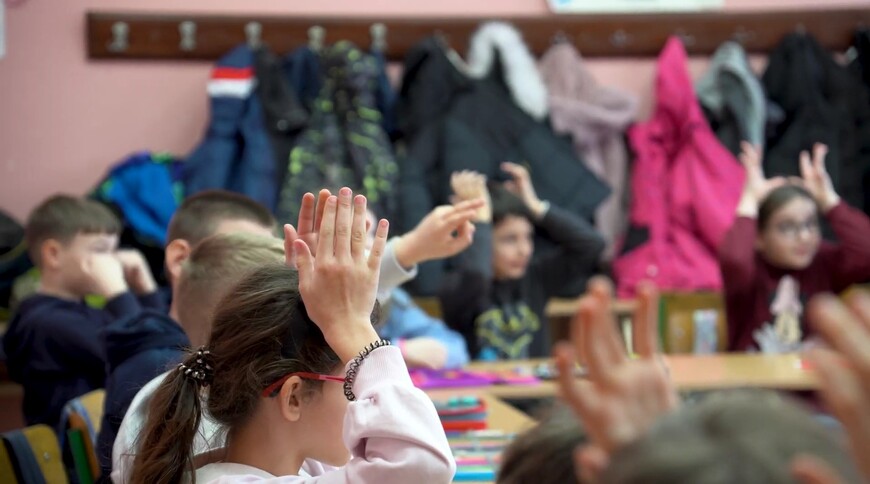
The survey was conducted among 1,044 primary and secondary school students across Serbia. Its findings show that more than half of respondents believe environmental degradation affects vulnerable groups the most, pushing them further to the margins of society. Students most often identified children, people living in poverty, national minorities, older people and persons with disabilities as those most exposed to environmental problems. At the same time, nearly one in three respondents were unable to identify which groups are most at risk, pointing to gaps in access to information and awareness.

These findings closely reflect the discussions Vasilije had with students while implementing the survey. Their reactions were mixed. Many welcomed the fact that the questionnaire was adapted to their language and completed via mobile phones, while others initially approached it as an informal classroom activity rather than a meaningful opportunity to express their views.

“The reactions were different,” Vasilije explains. “Students were happy that they could complete the survey on their phones and that the questions were simple and adapted to their way of speaking, but they also saw it as something informal, just an activity that takes time away from the lesson.”

At the outset, this attitude was often linked to a lack of confidence that their opinions could lead to change. “Yes, at the beginning students were uninterested and believed that their opinions would not change anything,” he says. “I explained to them that we are not only the future of the Republic of Serbia, but also its present, and that changes start with small things, such as filling in surveys like this or recycling plastic juice bottles.”

Once students began engaging more deeply with the topic, many quickly recognised the connection between environmental harm and social inequality. For Vasilije, this understanding is essential for fostering responsibility and solidarity among young people. “It is important for young people to understand these inequalities because it develops a sense of solidarity and responsibility towards others,” he says. “If we understand that environmental problems are not the same for everyone, it becomes much easier to advocate for fair solutions that bring benefits, especially to vulnerable groups.”

In his view, the survey results also reflect a broader shift among younger generations. “I think this shows how much today’s generations have progressed and that we are ready to actually do something concrete for the benefit of our country,” Vasilije adds.

Looking ahead, he believes decision-makers need to better recognise the role young people can play. “I would like decision-makers to understand that young people are not passive observers, but that they have clear views and a willingness to get involved,” he says. He underlines that the fight against discrimination and social inequalities must go hand in hand with environmental protection. “The fight against discrimination and social inequalities plays a key role in our society, especially among young people. Serbia must keep pace with the world and ensure that any form of belittling vulnerable groups is strictly sanctioned.”

Environmental protection, he concludes, is a fundamental step in the country’s development. “The fight to preserve the environment is also a key step in the development and improvement of the Republic of Serbia. If decisions are made without involving young people and without understanding how they affect the most vulnerable, those solutions will not be long-term or fair.”

The initiative is implemented within the European Union and Council of Europe joint programme Horizontal Facility for the Western Balkans and Türkiye, in partnership with the Protector of Citizens, the Panel of Young Advisors and civil society organisations, ensuring that young people’s insights directly contribute to recommendations and future decision-making.


This session of the website features inspiring narratives, human stories and success examples, that demonstrate positive change  and improvement in the lives of individuals, local communities, and society as a whole.

Back Montenegro’s youth drive change with award-winning inclusive tech solutions

Podgorica 23 December 2024
  • Diminuer la taille du texte
  • Augmenter la taille du texte
  • Imprimer la page
  • Imprimer en PDF
Montenegro’s youth drive change with award-winning inclusive tech solutions

In a bid to make schools more inclusive and understanding, high school students from across Montenegro gathered for the "Equal Hack: Code for Equality" hackathon, developing tech-driven solutions to promote equality and respect.

Maša Radulović, whose team from Nikšić clinched first place, aimed to break barriers, and create an inclusive environment for every student. "After researching, we concluded that the form of the game unites both education and entertainment. Our application is intended for students, parents, and teachers, and its purpose is to educate on how to co-operate with children with learning disabilities to avoid the often-present discrimination," Radulović explains.

The application is designed so users can select their group and progress through levels tailored for certain groups of children with disabilities. These levels consist of questions, and for incorrect or partially correct answers, AI generates counterarguments and teaches users through age-appropriate educational content.

Radulović's project was one of six that stood out in a thrilling two-day competition where young tech enthusiasts from Bar, Nikšić, Podgorica, Rožaje, and Tivat showcased their groundbreaking solutions aimed at fostering inclusion and respect in schools and communities. Guided by mentors from the Science and Technology Park of Montenegro (NTP), the students refined their ideas and enhanced their presentation skills, culminating in a final pitch to a panel of judges.

Maša Todorović, whose team from Podgorica secured second place, emphasised the importance of inclusivity in their project. "Our app, ‘EchoVentures,’ is specifically designed for visually impaired individuals. Through adventure and games, adapted to the age and needs of our users, it provides education and training," Todorović explained. "Parents can also track their child’s progress, ensuring continuous support." Her team’s project not only showcased their technical prowess but also their commitment to addressing the needs of marginalized groups.

The hackathon, part of the action "Quality Education for All" under the joint programme of the European Union and the Council of Europe “Horizontal Facility for Western Balkans and Turkiye”, highlighted the remarkable potential of Montenegro’s youth to drive social change through technology. All six finalist teams were invited by the Ministry of Education, Science, and Innovation to present their projects for potential further development, signalling a commitment to nurturing these innovative ideas.

Reflecting on the event, Maša Todorović emphasized the impact of the experience. "Working with our mentors and participating in this hackathon has been invaluable." Similarly, Maša Radulović shared her insights on teamwork and perseverance. "As young people who have just stepped into the world of science and innovation, we are ready to learn new knowledge every day. The hackathon is an experience that will encourage us to develop ideas and improve the status of our community in the future."

The hackathon’s success lies in its ability to empower young people to think creatively and collaboratively about the challenges their peers face. With the Ministry’s support, the winning teams are poised to further develop their projects, potentially transforming educational practices and fostering a more inclusive society.

Both Maša Radulović and Maša Todorović echoed a sentiment of gratitude and excitement for the future. "We are glad to have been part of this project and thank you for giving us the chance to show that we young people can be the initiators of change and progress. I invite all our peers to participate together in creating an inclusive environment by listening, helping, and respecting each other," Todorović concluded.

*Оваа ознака не ги прејудицира ставовите за статусот и истата е во согласност со Резолуцијата на ОНСБ 1244 и Мислењето на МСП за Декларацијата за независност на Косово.

Beneficiary
Albania
Bosnia and Herzegovina
Kosovo*
Montenegro
North Macedonia
Regional
Serbia
Türkiye
Topic
Anti-Discrimination
Fighting Corruption
Freedom of Expression
Justice
Reset Filter


Co-operation with 
Young European Ambassadors

 ДОБИВАЈТЕ ГИ НАЈНОВИТЕ ИНФОРМАЦИИ

Пријавете се на нашиот билтен