
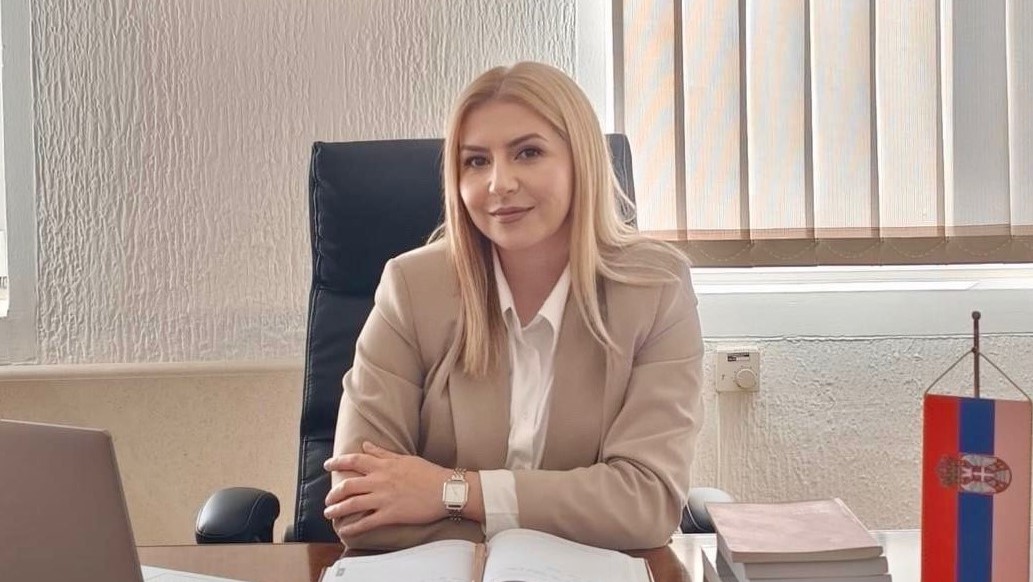

“We cannot say that we are close to a point where the media promote gender equality, avoid stereotypes, and empower women and marginalised groups.” With that blunt assessment, journalist Aleksandra Ničić sets the tone for a conversation that goes far beyond individual newsroom habits and speaks to the deeper structures shaping today’s media. As a journalist and member of the Journalists’ Association of Serbia, Ničić is also one of the authors of the newly published Guide for Gender-Sensitive Reporting, a publication born out of the growing gap between ethical standards and what actually happens in newsrooms. Her work sits at the intersection of practice and principle, where good intentions often collide with entrenched habits.
One of the most persistent challenges, she explains, is the lack of women’s visibility in the media, both as subjects of stories and as sources. According to the Global Media Monitoring Report published in 2025, women appear in just 28 percent of media content. “That is a slight improvement compared to 2020, when women accounted for 20 percent of media presence, but it remains a burning issue,” Ničić says. The problem is not only how often women appear, but also how they are portrayed.
“When women are present in the media, they are often represented through stereotypes,” she explains, adding that their voices are usually confined to soft news.
Language is another area where resistance persists. Ničić points out that part of the scientific and professional community continues to react with discomfort, and sometimes even open aversion, to the use of gender-sensitive language. At the same time, she draws attention to an issue that receives far less public scrutiny: the stereotypical portrayal of men and the promotion of toxic masculinity. This model, she explains, places social pressure on men to suppress emotions and assert dominance, which is harmful not only to women but to men themselves.
Taken together, these patterns show how far the media still are from consistently promoting gender equality. “This is not a problem limited to domestic media,” Ničić says, pointing out that the Global Media Monitoring Report highlights similar trends at the global level.
The Guide for Gender-Sensitive Reporting was created for young journalists precisely to address this gap between ethical standards and journalistic practice. Ničić describes gender-sensitive reporting as ethical and non-stereotypical journalism that applies equally to stories about gender roles, violence against women, and women’s political participation. “We wanted to present all the elements that this type of reporting includes in a clear and comprehensive way,” she explains.
The guide brings together the European regulatory framework, domestic legislation, ethical guidelines, and theoretical perspectives, supported by current examples from media practice. “In that way, young journalists have the opportunity to become familiar with the professional rules in this area in one place,” Ničić says. As a practical tool, the publication also offers concrete recommendations on ethical reporting about victims of violence, the proper use of gender-sensitive language, and the avoidance of stereotypical portrayals of both women and men. These recommendations, she notes, represent a synthesis of existing regulatory and self-regulatory frameworks, as well as theoretical considerations and guidance found in earlier manuals.
Developed through cooperation between the Education Centre of the Journalists’ Association of Serbia and the Council of Europe, the guide was produced under the action Protecting freedom of expression and of the media in Serbia (PROFREX), implemented by the Division for Cooperation on Freedom of Expression within the joint European Union and Council of Europe programme Horizontal Facility for the Western Balkans and Türkiye. Primarily intended as a resource for students of the Association’s Journalism School, the publication aims to strengthen understanding of responsible reporting on gender.
This collaboration has also extended beyond the publication itself. In April 2025, the two partners organised a workshop on gender-sensitive reporting, where journalism students discussed gender stereotypes, relevant European regulatory frameworks, and the importance of breaking the glass ceiling that continues to limit women’s advancement to decision-making positions in the media.
According to Ničić, stereotypes are often easiest to spot in everyday expressions and editorial habits, such as phrases like “the weaker sex,” the unnecessary emphasis on a woman’s marital status, or the neglect and downplaying of women’s achievements. Through the analysis of concrete examples, participants in the workshop were able to recognise patterns they had not previously questioned. This, she believes, is a strong starting point, alongside knowledge of ethical guidelines and a willingness to critically examine one’s own reporting.
There are signs of progress. Ničić notes that many young journalists show a genuine desire to respect ethical and professional standards, promote gender equality, and avoid stereotypes. At the same time, the fact that significantly more women than men took part in the workshop suggests that this issue still needs to be more actively addressed among male journalists. “A society in which women and men are equal is better for men as well,” she says, adding that the same logic applies to the media landscape.
Ultimately, however, individual commitment cannot compensate for the absence of supportive editorial policies. If editors believe that gender-sensitive language should be avoided, such practices will prevail regardless of ethical norms. Editorial decisions shape which topics are covered, who is invited to speak, and how different social groups are portrayed. It is equally important, Ničić stresses, that women are not discriminated against in editorial positions.
This is where the discussion inevitably returns to the glass ceiling. Although women numerically dominate many newsrooms, research shows that they are still rarely found in positions such as editor-in-chief. Any serious conversation about gender equality in the media, Ničić concludes, must therefore look beyond content alone and address the power structures that ultimately determine what reaches the public.


 MERR TË REJAT E FUNDIT