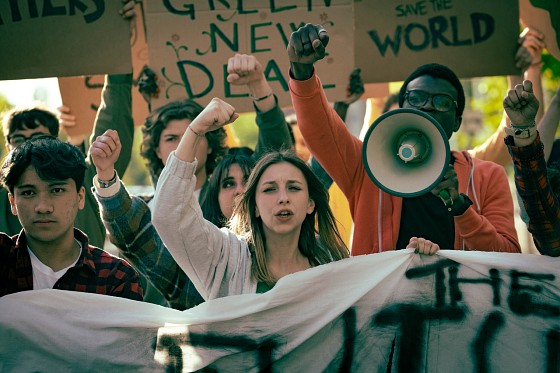
Climate justice is a transformative and intersectional approach to climate action that protects the rights and futures of young people, indigenous people and vulnerable populations. It ensures their meaningful participation in climate decision making, addresses structural inequalities and historical legacies, and promotes equitable relationships between people, communities and the natural world.
The triple planetary crisis is one of the most pressing challenges impacting our societies today and affecting our common prospects for the future (Stapleton and Jece 2024). This is particularly relevant and timely for young people. Not only are they inheriting the consequences of past actions without having contributed to them proportionally, but also they will be most affected by the impacts of this crisis in their lifetimes; and yet they do not have a proportional say/voice/vote to steer decision-making processes. This dual injustice upon the younger generations is widely described as intergenerational injustice, which spans ecological, economic, social and political concerns. Climate justice has been rapidly gaining political, legal and social traction, particularly among young people.