Back Young voices reveal the unequal impact of environmental challenges

Belgrade 5 January 2026
  • Diminuer la taille du texte
  • Augmenter la taille du texte
  • Imprimer la page
  • Imprimer en PDF
Young voices reveal the unequal impact of environmental challenges

“For me, the most important insight was realising that environmental problems are not ‘neutral’, but that they affect certain groups of people much more strongly.”

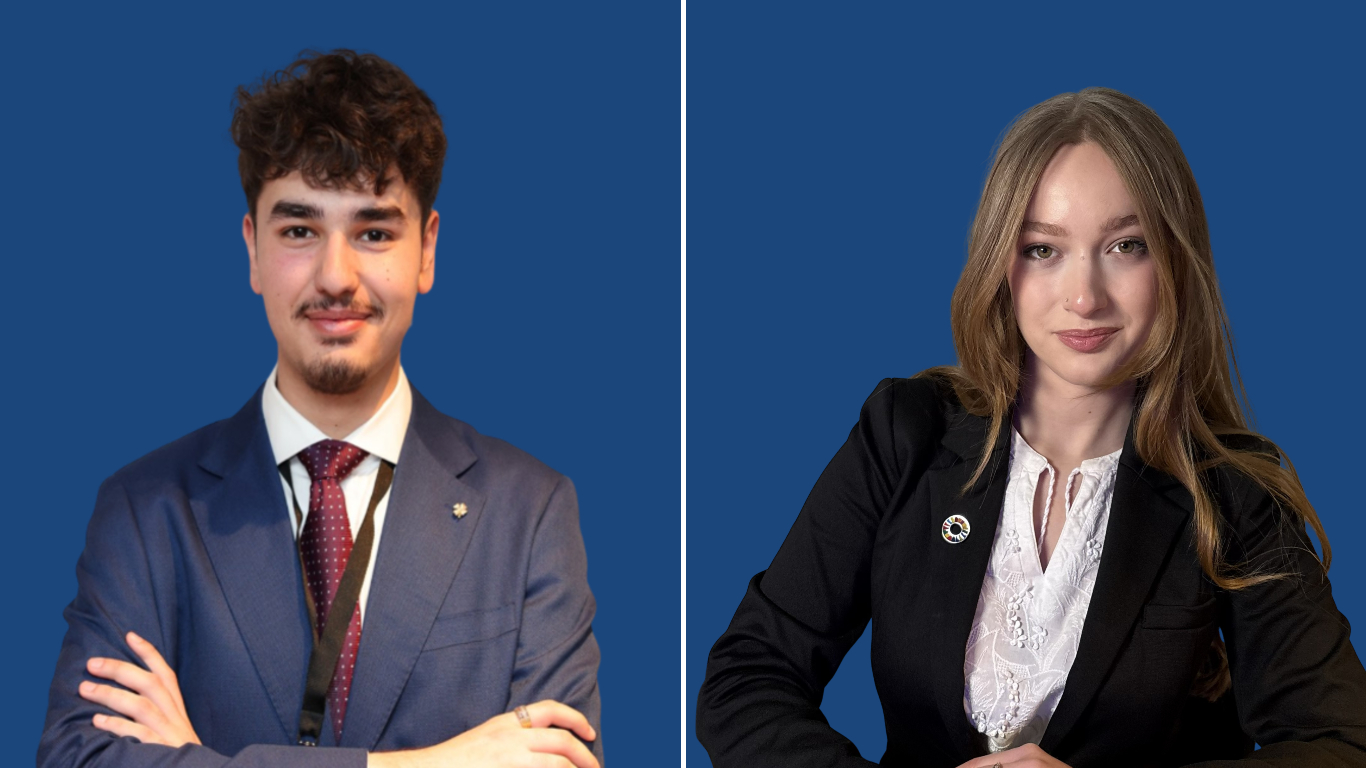
This reflection, shared by Vasilije Keranović from the Panel of Young Advisors to the Protector of Citizens, after working with students on a Council of Europe survey, captures one of the key messages emerging from the new Special Report on Youth and Environmental Rights. Presented in Belgrade, the report sheds light on how young people in Serbia increasingly understand environmental degradation as an issue closely linked to inequality, discrimination and access to rights.

“I understood that pollution, poor living conditions and climate change are most strongly felt by those who already have fewer opportunities to protect themselves or to influence decisions,” Vasilije adds. He also highlights another important takeaway from the process. “Another important fact is that many adults, especially educated people, are willing to take action on these issues.”

The survey was conducted among 1,044 primary and secondary school students across Serbia. Its findings show that more than half of respondents believe environmental degradation affects vulnerable groups the most, pushing them further to the margins of society. Students most often identified children, people living in poverty, national minorities, older people and persons with disabilities as those most exposed to environmental problems. At the same time, nearly one in three respondents were unable to identify which groups are most at risk, pointing to gaps in access to information and awareness.

These findings closely reflect the discussions Vasilije had with students while implementing the survey. Their reactions were mixed. Many welcomed the fact that the questionnaire was adapted to their language and completed via mobile phones, while others initially approached it as an informal classroom activity rather than a meaningful opportunity to express their views.

“The reactions were different,” Vasilije explains. “Students were happy that they could complete the survey on their phones and that the questions were simple and adapted to their way of speaking, but they also saw it as something informal, just an activity that takes time away from the lesson.”

At the outset, this attitude was often linked to a lack of confidence that their opinions could lead to change. “Yes, at the beginning students were uninterested and believed that their opinions would not change anything,” he says. “I explained to them that we are not only the future of the Republic of Serbia, but also its present, and that changes start with small things, such as filling in surveys like this or recycling plastic juice bottles.”

Once students began engaging more deeply with the topic, many quickly recognised the connection between environmental harm and social inequality. For Vasilije, this understanding is essential for fostering responsibility and solidarity among young people. “It is important for young people to understand these inequalities because it develops a sense of solidarity and responsibility towards others,” he says. “If we understand that environmental problems are not the same for everyone, it becomes much easier to advocate for fair solutions that bring benefits, especially to vulnerable groups.”

In his view, the survey results also reflect a broader shift among younger generations. “I think this shows how much today’s generations have progressed and that we are ready to actually do something concrete for the benefit of our country,” Vasilije adds.

Looking ahead, he believes decision-makers need to better recognise the role young people can play. “I would like decision-makers to understand that young people are not passive observers, but that they have clear views and a willingness to get involved,” he says. He underlines that the fight against discrimination and social inequalities must go hand in hand with environmental protection. “The fight against discrimination and social inequalities plays a key role in our society, especially among young people. Serbia must keep pace with the world and ensure that any form of belittling vulnerable groups is strictly sanctioned.”

Environmental protection, he concludes, is a fundamental step in the country’s development. “The fight to preserve the environment is also a key step in the development and improvement of the Republic of Serbia. If decisions are made without involving young people and without understanding how they affect the most vulnerable, those solutions will not be long-term or fair.”

The initiative is implemented within the European Union and Council of Europe joint programme Horizontal Facility for the Western Balkans and Türkiye, in partnership with the Protector of Citizens, the Panel of Young Advisors and civil society organisations, ensuring that young people’s insights directly contribute to recommendations and future decision-making.


This session of the website features inspiring narratives, human stories and success examples, that demonstrate positive change  and improvement in the lives of individuals, local communities, and society as a whole.

Back A school where children learn to lead

Turija, Serbia 19 September 2025
  • Diminuer la taille du texte
  • Augmenter la taille du texte
  • Imprimer la page
  • Imprimer en PDF
A school where children learn to lead

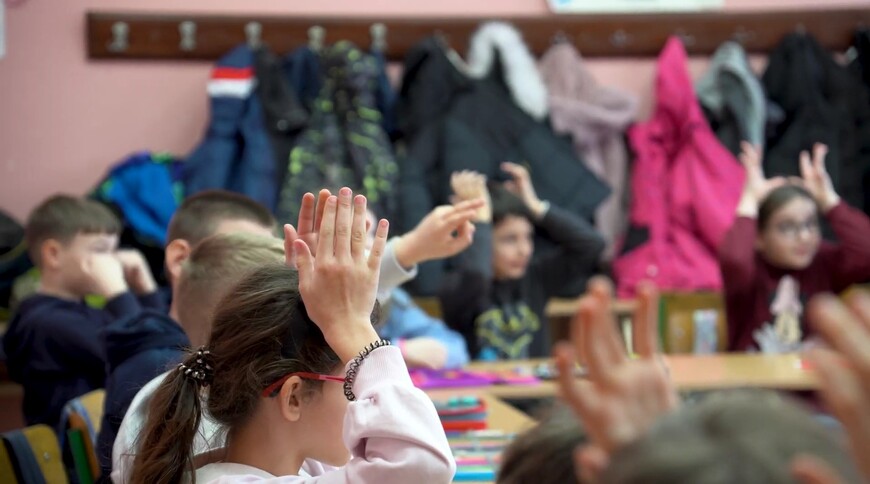
In the quiet village of Turija in Serbia, “Veljko Dugošević” Primary School hums with more than the sound of lessons. Here, democracy is not just a subject in the textbook- it’s part of daily life. Pupils debate, compromise, take initiative, and share responsibility for their community. Over time, this small rural school has become a model for how democratic values can take root and flourish.

For director Sofia Milenković, the change has been transformative. She explains that focusing on human dignity, conflict resolution, and responsibility has “left a deep and lasting mark” on the school. Conflicts are no longer left to escalate: pupils talk things through, listen to different perspectives, and work toward compromise.

“We achieved that they are not just passive observers, but active participants in shaping school life,” she says, noting that such engagement boosts confidence and strengthens ties with the local community. I believe this is the most valuable contribution we are making to our society,” Milenković added.

That community support runs deep. Sanela Ankić, a municipal council member in charge of education, describes the school as a “recognised example” for others. She praises its modern approach to teaching, strong involvement of parents, and commitment to preparing children who “respect differences, value other people’s opinions, and strive for a better future.” The municipality, she says, “wholeheartedly supports” the work because one day, "these same children will inherit local leadership roles and, hopefully, correct the mistakes of the past."

In the classroom, teachers have woven democratic skills into every subject. Maths teacher Nebojša Ilić uses group work and real-life projects to encourage responsibility and teamwork. When disagreements arise, students are guided toward discussion and compromise. Mistakes become opportunities for joint problem-solving, not blame. “This way of teaching makes them more mature, responsible, and empathetic,” he says.

The change is just as visible at home. As a mother whose first child grew up with this programme, Biljana Šojanović says she sees from the very beginning that the school plays an extremely important role in shaping a community that nurtures mutual respect, equality and appreciation of diversity. What I especially like about ‘Veljko Dugošević’ is that it’s not only about acquiring knowledge– the school is also a place where children learn to be empathetic, tolerant and aware of the world around them. These values are not just mentioned in class but are lived every day in the way children communicate with each other, resolve disagreements and accept diversity.

These lessons are evident in the pupils’ own actions. Future seventh-grader Mija Stević recalls a class vote on how to improve the schoolyard- from benches and swings to planting trees and flowers- where everyone, from teachers to parents, worked together on the chosen ideas. “I realised that listening to others, respecting different opinions, and working together really matters,” she says. Over time, she adds, responsibility has become central to how students approach school life: it’s not just about finishing homework, but also honesty, respect, and caring for shared spaces. “Responsibility means we all work together to make the school a better place,” Mija explains.

Since joining the Council of Europe’s education programme in 2017, first as a pilot school and later as a mentor, “Veljko Dugošević” has become one of a number of reference points in Serbia for democratic culture in education and has also opened a Council of Europe Library with donated books. But its greatest achievement may be the everyday moments: a child admitting a mistake instead of hiding it, classmates solving a dispute without anger, a community shaping its school together.

In Turija, democracy is no longer an abstract concept. It’s a living, shared practice, and it starts in the classroom.


This initiative is carried out within the action “Quality education for all” which is part of the joint European Union and Council of Europe programme “Horizontal Facility for the Western Balkans and Türkiye”.

*Ovaj naziv je bez prejudiciranja statusa, i u skladu je sa Rezolucijom Savjeta bezbjednosti Ujedinjenih nacija 1244 i mišljenjem Međunarodnog suda pravde o Deklaraciji o nezavisnosti Kosova.

Beneficiary
Albania
Bosnia and Herzegovina
Kosovo*
Montenegro
North Macedonia
Regional
Serbia
Türkiye
Topic
Anti-Discrimination
Fighting Corruption
Freedom of Expression
Justice
Reset Filter


Co-operation with 
Young European Ambassadors

 Budite u toku sa najnovijim vijestima

Prijavite se na naš bilten