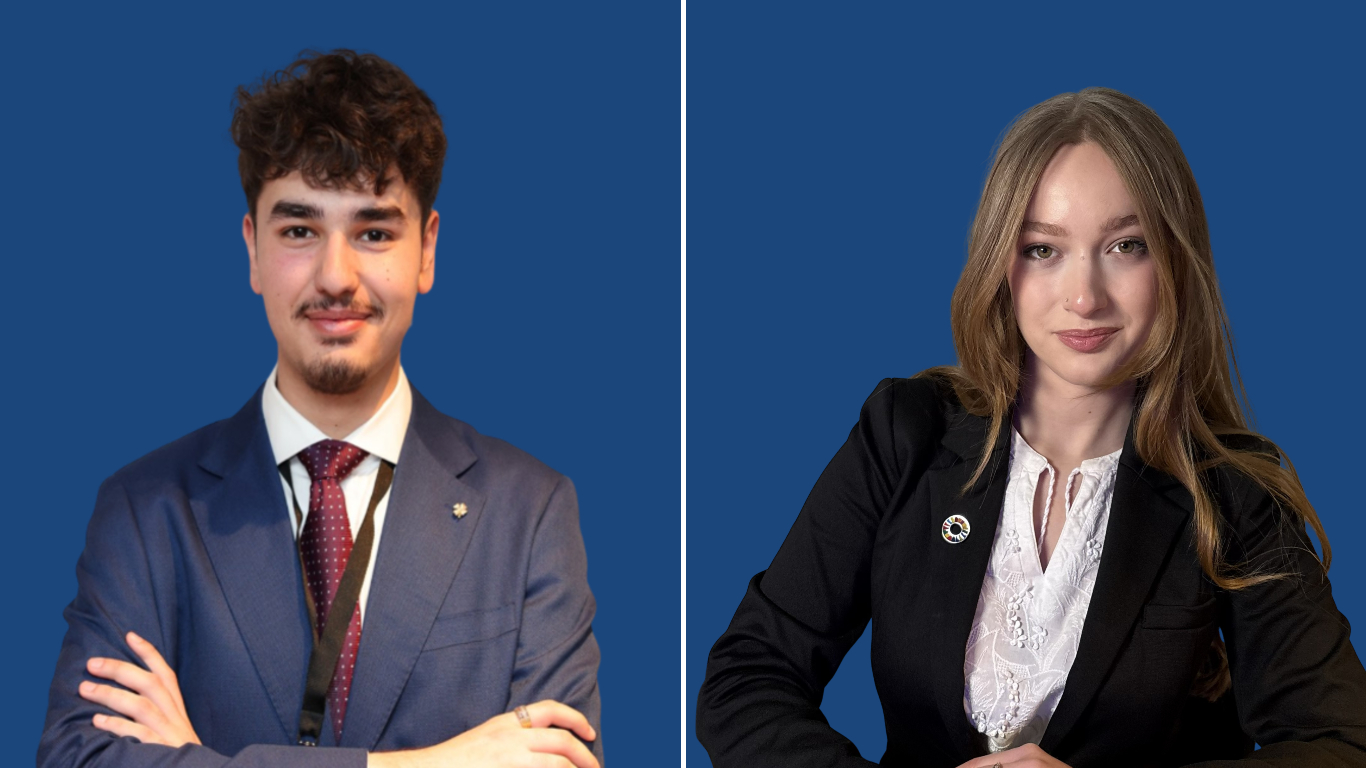

“Let’s give a child a chance.” For Mirza Forić, an IT teacher at the Mixed Secondary School in Čelić, this simple sentence became much more than a teaching approach. Over the years, it has shaped the way he approaches teaching and sees his role in the classroom. “The moment it clicked for me that it was okay to be different, that I didn’t have to be like the other teachers, I started to see results,” Mirza recalls.
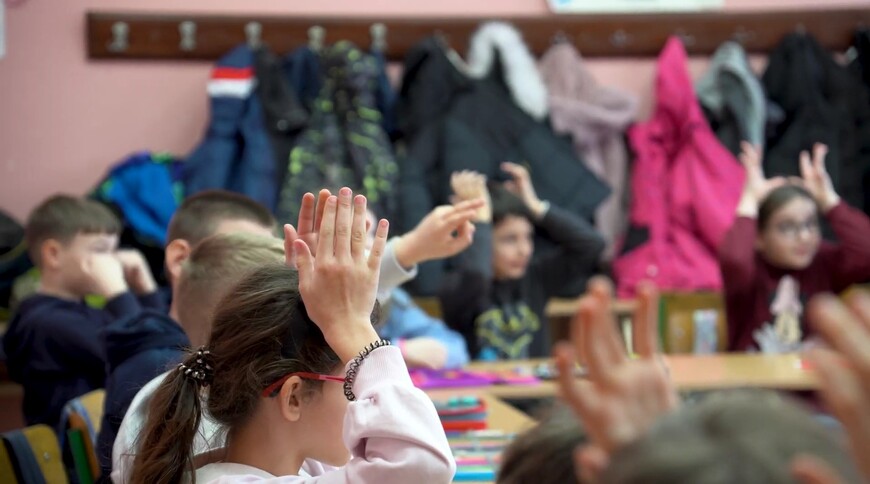
In his classroom, alongside acquiring knowledge, students are encouraged to ask questions, express different opinions and actively participate in classes. Such approaches are part of broader efforts by schools across Bosnia and Herzegovina to further strengthen participation, cooperation and critical thinking in the classroom.
At the other end of the classroom, student Amina Citrić recalls her first days at secondary school in Čelić. “I was quite reserved. Through all these activities, I learned how to express my opinion and share it, because it can help start something new and contribute to positive change in our community. It is a great feeling when you realize you have contributed to something meaningful.”
Her story is not only about self-confidence. It is about finding her own voice. It is about the moment when a student stops being a passive observer of the teaching process and becomes someone who believes their ideas can make a difference.
lthough they speak from different perspectives, Mirza and his student are connected by the same experience – that of a school evolving together with the people who make it what it is.
Stories like these can be found in many schools across Bosnia and Herzegovina. Such approaches are not new, but through the “Quality Education for All” project, they are further strengthened, enhanced and connected through joint learning, professional support and the exchange of good practices among schools. In this way, teachers and students have more opportunities to shape a school environment where dialogue, participation, cooperation and respect for different perspectives can further thrive.
Today, six schools in Bosnia and Herzegovina serve as Resource Centres for Democratic School Culture. Through the project, they have received an additional framework, professional support and opportunities to exchange experiences and support other schools, enabling them to further develop and strengthen existing practices of participation, inclusion and democratic engagement in school life. In Orašje, Čelić, Brčko, Prijedor, Kiseljak and Zenica, teachers and students are contributing to this process through everyday activities in their schools. Sometimes, these changes begin with small but meaningful moments.
In one classroom in Brčko, a group of the youngest students discussed the fairy tale The Emperor’s New Clothes. Through an adapted version of the well-known story, students had the opportunity not only to explore its literary content, but also to ask questions, consider different perspectives and express their own opinions. In other schools, students take part in initiatives in their local communities, critical thinking clubs and activities that bring together schools, parents and local communities.
These are precisely the types of practices that the “Quality Education for All” project further supports and strengthens through training, mentoring and the exchange of experiences among schools. Through the implementation of the Reference Framework of Competences for Democratic Culture, schools gain additional tools and methodological support to develop activities that encourage student participation, cooperation and respect for different perspectives.
Throughout the project, 33 primary and secondary schools from different parts of Bosnia and Herzegovina have participated in training and mentoring programmes, providing teachers and schools with additional tools, methodological support and opportunities to exchange experiences in the area of democratic school culture. More than 150 teachers have taken part in training and implemented more than 300 teaching practices that further encourage and strengthen critical thinking, participation and active citizenship, with the support of the Centre for Educational Initiatives “Step by Step” and proMENTE Social Research.
Yet behind these numbers lie hundreds of individual stories like those of Mirza and Amina. Stories of new experiences in the classroom, greater student participation in school life, and schools that, through their everyday work, strive to further strengthen an environment for learning, cooperation, respect and active citizenship.
Because sometimes, all it takes for a major change is one simple decision – to give a child a chance.


 БУДИТЕ У ТОКУ СА НАЈНОВИЈИМ ВЕСТИМА